1920s craftsman bungalow vitrified clay tile. The dominant housing stock in Broad Ripple is 1920s-1930s craftsman bungalows along Cornell, Guilford, Park, and the side streets between Westfield Boulevard and the Monon. Public sewer reached the neighborhood as those homes were being built, and the original laterals were vitrified clay tile — the standard residential sewer material of the era. The bell-and-spigot joint design every 4 feet creates the perfect entry point for a root tip once the original joint compound loosens. The same homes that draw buyers for their craftsman character are the homes with the oldest laterals on the block.
White River bottomland soil holds moisture. Broad Ripple sits in the White River corridor between the river itself and the Central Canal, on alluvial bottomland soils that hold water far longer than the clay uplands a few miles south. Aggressive root systems — silver maple, willow, sycamore, mulberry — thrive on the moisture and grow faster, reach farther, and re-intrude faster after a cut than they do in drier Marion County soils. The same lateral that needs annual root work in Broad Ripple might need work every 18-24 months in Nora or Castleton.
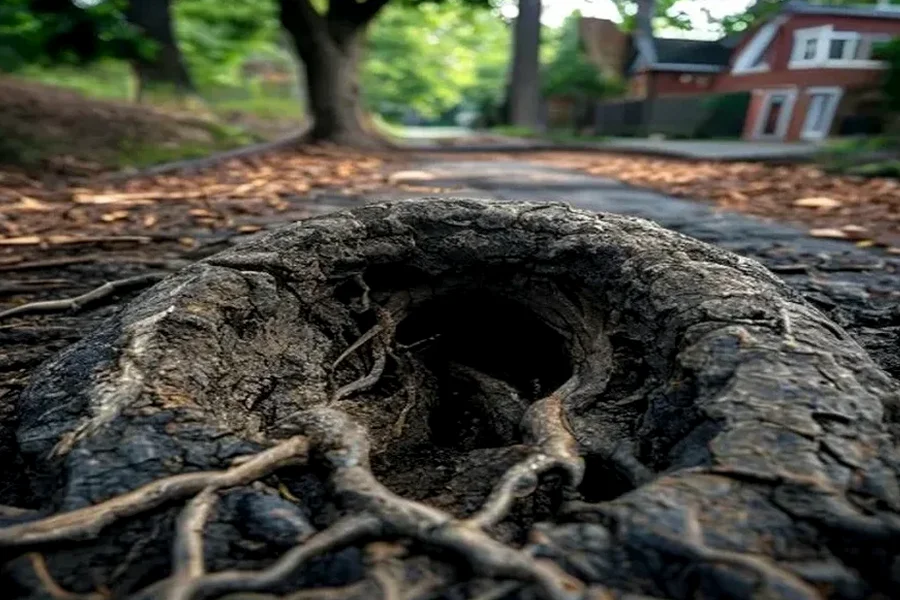
One of the densest mature canopies in Indianapolis. The mature canopy through Broad Ripple, Cottage Home, and adjacent SoBro is the result of a hundred years of growth on lots that were rarely cleared. Silver maple is the dominant root offender — it grows fast, spreads wide, and finds sewer lines from 50+ feet away. Willow along the White River and the Central Canal contributes. Mulberry behind alley garages contributes. Even a single mature silver maple in the next yard can put roots into your lateral.
The result is recurring intrusion. Broad Ripple is the neighborhood where homeowners learn to recognize root signs: the slow tub drain, the gurgling toilet after a load of laundry, the once-a-year basement floor-drain backup after a heavy rain. We service the same homes on a 12-30 month rotation. Annual cut + treatment is one workflow; for homes hitting two or more cuts a year, we walk through CIPP lining math side-by-side so the long-term cost picture is clear.