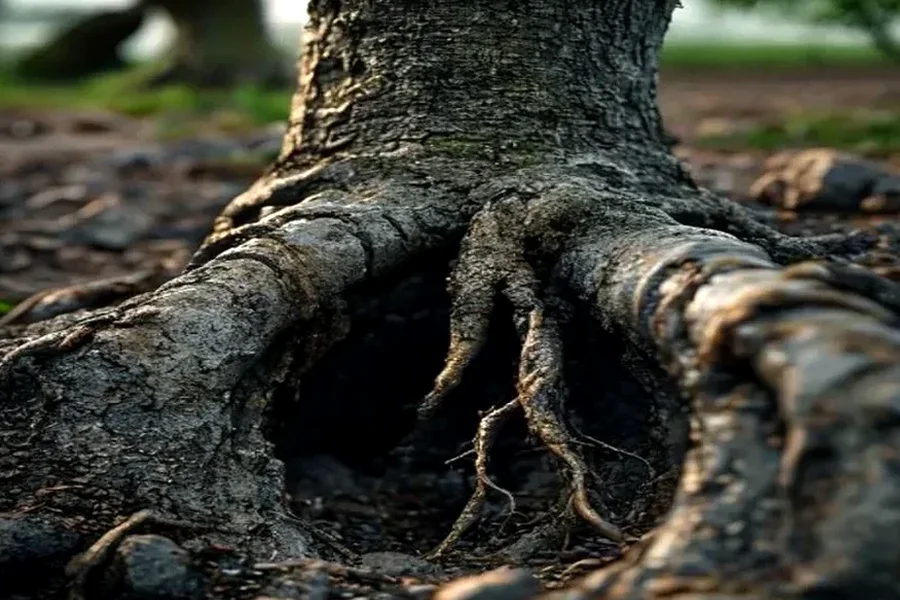
Camera + mechanical cutting
HD camera confirms roots first. Drum machine + cutting head sized to the lateral (4-inch Brick Street Village standard). Cuts root mass back to the pipe wall along the affected run.
Indy Drain Pros — Licensed in Indiana · Bonded & Insured · Satisfaction Guaranteed · (317) 608-3777 Need more context on this neighborhood? See our full Zionsville service area for the full coverage map.
Zionsville root work concentrates in two predictable pockets. The Brick Street Village core — Main Street, Cedar Street, Oak Street, Sycamore, and the blocks adjacent to the historic commercial corridor — carries 1860s-1890s vitrified clay tile laterals under village canopy on tight historic lots. Bell-and-spigot joints every 4 feet, permanent root pressure, recurring intrusion. Eagle Township farmsteads along the back roads and the unincorporated edges of the Town of Zionsville retain decades-old clay or Orangeburg laterals with their original tree lines. Anson, Holliday Farms, Wolf Run, Royal Run, and Bridgewater Club — the estate subdivisions from the 2000s onward — run modern PVC where roots are unusual; when those homes call us for slow drains the camera usually shows a settlement offset or grease accumulation instead. We cut, hydro jet the residue, then apply foaming herbicide for a 2-3 year cleared interval. Same Indianapolis flat-rate — no Boone County surcharge. Browse our full service catalog or our Zionsville service area. Root Removal Zionsville — same flat-rate at 3 AM Sunday as 10 AM Tuesday.
The Brick Street Village core is the primary root zone. The original Zionsville settlement around Main Street, Cedar Street, Oak Street, Sycamore, and the blocks bordering the historic Brick Street commercial corridor has homes from the 1860s-1890s with original vitrified clay tile sewer laterals. Public sewer reached the village in the late 1800s and a meaningful share of those original laterals are still in service 130+ years later. The failure modes are predictable: tree-root intrusion at every 4-foot bell-and-spigot joint, gradual joint offset as ground settles, occasional segment cracking from frost heave or settlement. The mature canopy that's grown along the village for over a century — on lots that are tighter than modern subdivision lots — puts permanent root pressure on every joint underneath.
Historic-lot access is the operational detail. Brick Street Village lots are smaller than modern subdivision lots, the streetscape is protected, and adjacent properties are close enough that any access pit or hydro-jet equipment staging needs coordination with the homeowner before dispatch. We work out the access plan in writing — driveway, alley, or front-yard staging — so the visit lands clean. Trenchless cut + jet + foam leaves no surface impact, which is why it's the standard recommendation in the Village over excavation.
Eagle Township farmsteads are the second genuine root pocket. The original Eagle Township farmsteads — many along the back roads at the unincorporated edges of the Town of Zionsville — retain decades-old clay or Orangeburg laterals with their original tree lines still in place. These are scattered rather than concentrated in any one subdivision, but the combination of old lateral + mature trees + larger lot makes them genuine root-work candidates. Some of these properties also overlap with our septic-to-sewer conversion work (covered on our Zionsville sewer line repair page) where the conversion timing creates a natural opening to swap a chronically root-intruded lateral for new PVC.
The estate subdivisions are a different story. The 2000s+ estate subdivisions — Anson, Holliday Farms, Wolf Run, Royal Run, Bridgewater Club, and the surrounding upscale developments — run modern PVC laterals where joints are solvent-welded rather than bell-and-spigot. Root intrusion is unusual within the first 30 years. When estate-subdivision homes call for slow drains, the actual cause is usually a single offset from trench-backfill settlement, a single root intrusion at a fitting (rare but possible), grease accumulation in a long branch run, or impact damage from later landscape excavation (pool installation, irrigation expansion). Camera scope confirms which cause and changes the treatment recommendation.
Camera scope before cabling, always. Because the estate-subdivision share of the Zionsville root-call mix is meaningful, we scope first and treatment-match second. Saves money for the homeowner and gets the actual problem fixed instead of cabling around the wrong diagnosis.
Brick Street Village: cut, jet, treat. Estate subdivisions: scope first, treatment matches whatever the camera shows.
HD camera confirms roots first. Drum machine + cutting head sized to the lateral (4-inch Brick Street Village standard). Cuts root mass back to the pipe wall along the affected run.
4,000 PSI water jet pushes the cut root residue downstream to the city main. Pipe walls clean of biofilm where roots were attached. Leaving residue gives new root tips a foothold — so we always flush.
EPA-registered copper sulfate or dichlobenil agent applied through the cleared line. Coats joint entry points, kills root tips on contact, extends cleared interval to 2-3 years from 9-15 months.
Annual treatment works on a single intruding joint with otherwise sound clay tile. It stops working when the same 50-100 foot section shows three or more intrusion points on camera, when you're calling twice a year, or when a backup has reached floor-drain or basement level. Cured-in-place pipe lining seals every joint along the affected span in one one-day installation — and on Brick Street Village laterals where access is tight and historic-district restoration is more involved, trenchless is dramatically less disruptive than a traditional excavation across a mature village lot. Zionsville CIPP math typically tips somewhere between year 5 and year 8 of annual treatment.
Standard for a single intruding joint with otherwise sound clay tile. Most cost-effective short-term while you're managing intrusion year to year.
Resin liner cures inside the existing pipe and seals every joint along the affected span. Roots can't find entry. Trenchless — preserves the Brick Street Village streetscape.
See our Zionsville main sewer line repair page for full CIPP detail and Brick Street historic-district coordination.
130+ year clay tile under permanent root pressure. Annual treatment is the default maintenance approach.
Decades-old lateral under mature trees. Genuine root-work candidate. Standard cut + jet + foam protocol.
Probably not roots — likely a settlement offset or grease accumulation. Camera scope first.
Vent disruption from partial root obstruction in the lateral. Classic early sign before a main-line backup.
Same flat-rate everywhere — crews staged across the metro. Each area page covers the local pricing detail + access notes.
Brick Street Village clay tile specialty. Eagle Township farmstead genuine root pocket. Anson + Holliday Farms + Wolf Run camera-scope-first. Same flat-rate — no Boone County surcharge.
Call (317) 608-3777The Brick Street Village core — Main, Cedar, Oak, Sycamore, and the blocks adjacent to the historic commercial corridor — has homes from the 1860s-1890s with original vitrified clay tile sewer laterals. The bell-and-spigot joint every 4 feet creates an entry point as joint compound deteriorates, and the village's mature canopy on tight historic lots puts permanent root pressure on every joint. Recurring intrusion is the default failure mode.
Mechanical cutting head only is $400-$550. Combined with hydro jetting and foaming herbicide is $650-$950 — upper end reflects historic-district access coordination in the Village and deeper laterals common in Brick Street homes. Same flat-rate as central Indianapolis — no Boone County travel surcharge.
Rarely. The estate subdivisions built from the 2000s onward run modern PVC where joints are solvent-welded. Root intrusion is unusual within the first 30 years. When estate-subdivision homes call for slow drains, the actual cause is usually a settlement offset, a single fitting failure, or grease accumulation. Camera scope confirms quickly.
The original Eagle Township farmsteads along the back roads and unincorporated edges of the Town of Zionsville retain decades-old clay or Orangeburg laterals with the original tree line in place. These are the second genuine root pocket. Some overlap with our septic-to-sewer conversion work where annexation timing creates an opening to swap the chronically root-intruded lateral.
Brick Street Village lots are smaller than modern subdivision lots and the streetscape is protected. We work out the access plan in writing before dispatch — driveway, alley, or front-yard staging — so the visit lands clean. Trenchless cut + jet + foam leaves no surface impact, which is why it's the standard recommendation in the Village.
No. The foaming agents (copper sulfate or dichlobenil-based) are EPA-registered for in-pipe sewer use. They stay inside the lateral, attack root tips at the joint entry point, and flush to the city main as part of normal sewer flow. They don't affect the tree above ground or its trunk roots.
Dispatch is 40-55 minutes from our central staging via I-65 north or US-421. Same flat-rate as a Marion County call — no Boone County travel surcharge. Village root calls are usually scheduled rather than emergency; declared backups get same-day priority.
Yes. For homes with confirmed recurring intrusion we schedule cut + jet + treatment on a 12 or 24 month rotation and price it as a maintenance plan rather than separate calls. We carry the camera-history file so you don't have to remember the dates.
Camera-diagnosed first. Cutting head sized to your lateral. 4,000 PSI hydro jet flush. EPA-registered foaming herbicide. CIPP lining priced side-by-side when the math turns. Brick Street Village historic-lot access experienced.