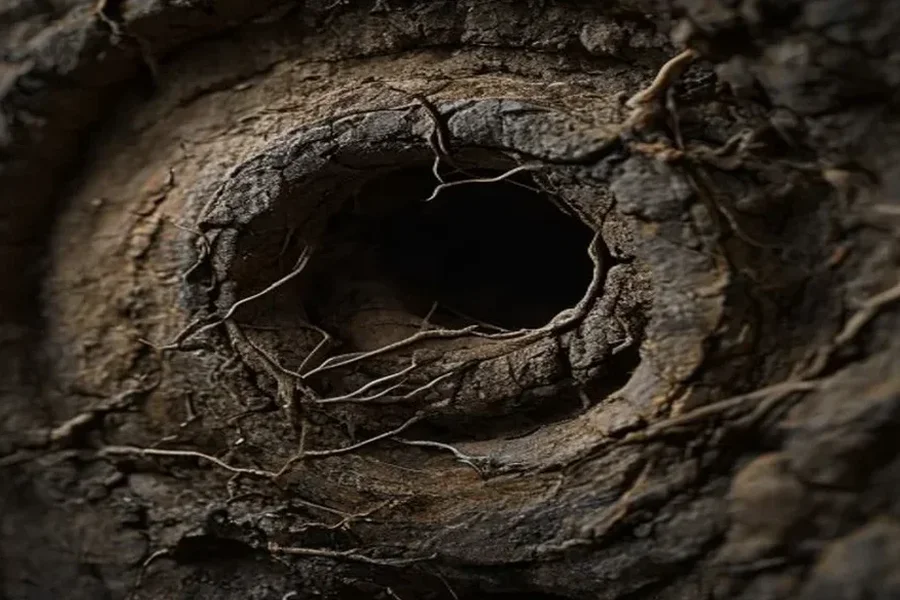
Every Indianapolis drain crew that's been in business for more than a year has cleared more clay tile laterals of tree roots than they could count. It's so common in our neighborhoods that we schedule the work in advance during fall — when roots become most active before winter dormancy.
Here's why Indianapolis sees this so much more than newer-construction-dominated cities like Phoenix or Houston, what you can do about it, and which neighborhoods are most affected.
Tree Roots Sewer Lines Indianapolis: The three Indianapolis conditions
1. Clay tile sewer laterals
Indianapolis was a major beneficiary of the sanitary sewer expansion programs of the late 1800s and early 1900s. Vitrified clay tile was the material of choice — durable, chemical-resistant, locally manufactured. Most Indianapolis homes built before 1980 have clay tile sewer laterals.
Clay tile is laid in 2-3 foot sections, joined with mortar. Over 50-100 years, the mortar degrades and joints loosen. Even hairline gaps are enough for tree roots to find.
2. Mature, aggressive tree species
Indianapolis's tree canopy is exceptional — silver maple, sycamore, oak, willow, mulberry. These species have aggressive surface root systems that extend 2-3 times the canopy diameter.
Silver maples are particularly problematic. They were planted heavily in Indianapolis subdivisions from 1920-1970 because they grow fast and provide shade quickly. They also have the most aggressive root system of any common Indianapolis tree.
3. Indiana clay soil
Central Indiana sits on heavy clay soil that expands when wet and contracts when dry. The cycle stresses buried pipes, accelerating joint failure. Soil shifting also exposes lateral joints to root systems searching for water during dry periods.
How root intrusion progresses
- Year 1-2 of root entry: Small root hairs find the joint, grow inside the pipe. No symptoms.
- Year 2-5: Root mass develops inside the pipe. Catches paper, hair, debris. Slow drain begins.
- Year 3-6: Root mass widens. Recurring clogs. Repeated cabling clears but doesn't fix.
- Year 5-10: Major intrusion. Annual maintenance required to prevent backups.
- Year 8-15: Without intervention, pipe damage worsens. Joint separation, eventual collapse.
The neighborhoods most affected
From our service records, the Indianapolis neighborhoods that generate the most root-removal calls:
- Irvington — historic district, mature canopy, original clay tile
- Meridian-Kessler — same combination, larger trees
- Crown Hill — proximity to cemetery's mature canopy adds pressure
- Garfield Park — park-adjacent root pressure
- Nora — silver maple heavy
- Butler-Tarkington — clay tile + dense canopy
- Fountain Square — oldest neighborhood housing stock
What works (and what doesn't)
Doesn't work alone
- Cabling once a year — clears the visible mass but roots regrow within 3-6 months
- Chemical root killers from the store — too dilute, don't reach the full intrusion
- Removing the offending tree — stops new growth but doesn't fix existing damage; existing roots inside the pipe stay and rot
- Salt or copper sulfate in the toilet — old folk remedy; barely effective and corrosive to pipes
What actually works
- Mechanical cutting + hydro jet + foaming herbicide — the professional standard. Cut the root mass back, jet the residue, apply foaming RootX or similar to kill root tips on contact. Extends cleared interval to 18-24 months.
- Trenchless pipe lining (CIPP) — one-time fix. Inserts a resin-cured liner inside the existing pipe, sealing every joint. Roots can't penetrate the new liner. Lifetime warranty.
- Pipe replacement — last resort when the host pipe is too damaged for lining.
The long-term math
For a typical Indianapolis home with chronic root intrusion:
- Annual root removal + herbicide: $400-$850/year
- 10-year cost: $4,000-$8,500
- Trenchless lining (one-time): $4,500-$8,500
- Math favors lining after roughly year 6-8 of annual treatments
For homes with infrequent root issues (cleared once every 2-3 years), annual maintenance is the better long-term economics.
Preventing future intrusion
If you're planning landscaping near your sewer lateral:
- Identify lateral location first (we can locate it for you)
- Don't plant aggressive root-spreading species within 25 feet of the lateral (especially silver maple, willow, sycamore, mulberry)
- If you must plant near the lateral, choose slow-growing species with tap roots rather than spreading surface roots
- Consider root barriers during planting — physical or chemical barriers that discourage roots from following the lateral path
See our root removal service for pricing and process detail. For maintenance scheduling, see our frequency guide.