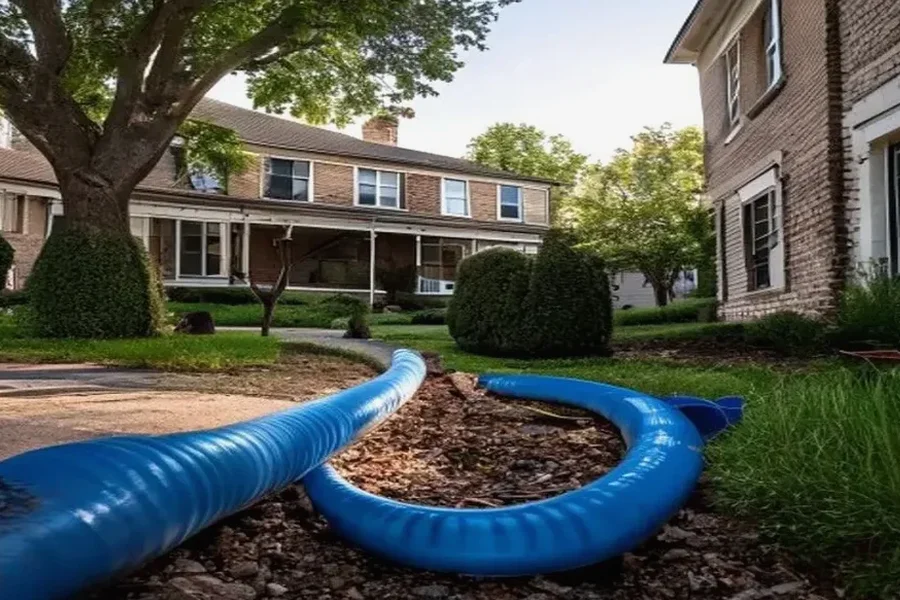
Camera diagnostic scope
Full lateral scope before any quote. Locates depth, severity, joint failures, structural condition. $250, credited toward repair.
Main sewer line repair in Irvington runs a specific profile that the rest of Indianapolis doesn't share. The Historic District housing stock from 1880s-1930s runs original vitrified clay tile laterals — typically 80-120 feet of clay through the front yard to reach Washington Street's main sewer. The mature canopy — silver maple, oak, sycamore, willow — is protected and not going anywhere, which makes traditional excavation operationally painful and historically disruptive. The clay tile is typically structurally sound (joints fail, not pipe walls), which makes CIPP cured-in-place lining the standard recommendation. Camera scope first. Method comparison in writing. Citizens Energy permits pulled. Historic District streetscape coordination handled. Start at our service catalog or browse our Irvington service area.
Original 1880s-1930s vitrified clay tile laterals. The Irvington Historic District housing stock — Audubon Road, Bonna Avenue, Bolton Avenue, Ritter Avenue, Layman Avenue, and the side streets that ring the core — was built between 1880 and 1930 when Indianapolis's east-side trolley line drove residential expansion along Washington Street. Public sewer reached the neighborhood as those homes were going up, and the standard residential lateral material was vitrified clay tile in 4-foot bell-and-spigot lengths. A century-plus later, joint compound has deteriorated at most joints — and CIPP lining is the right call because it seals every joint along the affected span in one one-day installation. Need more context on this neighborhood? See our full Irvington service area for the full coverage map.
The 80-120 foot Historic District lateral run. Most Irvington laterals run through the front yard from the foundation to Washington Street's main sewer — typically 80-120 feet of clay tile. Traditional excavation of a full 100-foot lateral would mean trenching across the entire front yard, removing landscaping, potentially disturbing tree roots, and dealing with Historic District streetscape coordination for any work in the public right-of-way. CIPP needs only two small access pits (or works through existing cleanouts where available), preserves the canopy, and finishes in one day. The math is dramatic on Irvington's longer laterals.
When CIPP isn't the right answer. CIPP requires the host pipe to hold round shape during cure. We camera-scope first. If the clay tile shows structural collapse (a section has caved in), severe ovalization, or a full break where the liner can't pull through, we route to pipe bursting (replaces the lateral through the existing path with HDPE) or short spot excavation (cut out and replace one failed section). Both alternatives are also less disruptive than full-lateral excavation. Pipe bursting runs $70-$170/ft; spot excavation runs $1,200-$4,500 for a single fitting replacement.
Citizens Energy and Historic District permit coordination. Repair work that crosses the property-line tap or alters the Washington Street main connection requires a permit through Citizens Energy + Indianapolis DPW. We pull the permit, coordinate inspection, and provide all documentation. Historic District streetscape coordination adds a written approval layer for any work that touches public right-of-way — handled in writing before the project starts so there are no surprises.
Full lateral scope before any quote. Locates depth, severity, joint failures, structural condition. $250, credited toward repair.
Trenchless interior lining — the default Irvington recommendation. Seals all clay-tile joints. 50-year service life. $95-$220/ft.
Trenchless full replacement when CIPP host conditions don't hold. New HDPE through original path. $70-$170/ft.
Single failed joint or section. Excavate, replace, restore. Minimal Historic District impact. $1,200-$4,500.
Full excavation when trenchless isn't viable. Historic District restoration scoped upfront. $100-$280/ft.
Add or upgrade exterior cleanout for future access. Often paired with repair. $450-$1,200.
Every Irvington sewer line repair starts with a camera scope. Method quote follows the scope and is presented in writing with method-by-method comparison. Historic District streetscape coordination and front-yard restoration (sod, mulch, landscape replacement) are itemized so you see exactly what's included.
Full lateral scope. Credited toward repair.
Default Irvington recommendation. 80-120 ft typical run = $7,600-$26,400.
When CIPP host conditions don't hold.
Single failed joint + restoration.
Historic District restoration scoped upfront.
Exterior cleanout for future access.
Permit fees itemized separately. Standard sod/mulch restoration included; Historic District streetscape coordination, brick-paver walkways, and mature-tree root protection quoted line-item.
Main-line indicator. Toilet + tub + kitchen slow at the same time means the lateral, not branches. Scope first.
Heavy multi-joint intrusion. CIPP math now favors lining over continued treatment. We'll quote both side-by-side.
100+ year lateral risk. Pre-inspection scope before contract gives accurate condition data and saves negotiation headaches.
Exfiltration indicator. Line leaking into soil. Scope locates the break, repair stops the leak.
Same flat-rate everywhere — crews staged across the metro. Each area page covers the local pricing detail + access notes.
Historic District 1880s-1930s clay tile specialty. CIPP default for the 80-120 ft Irvington lateral runs. Pipe bursting + spot excavation alternatives. Citizens Energy permits pulled.
Call (317) 608-3777Spot excavation runs $1,200-$4,500. CIPP cured-in-place lining runs $95-$220 per foot. Pipe bursting runs $70-$170 per foot. Traditional dig-and-replace runs $100-$280 per foot. Irvington's longer 80-120 ft Historic District laterals mean total project costs run higher than newer-construction neighborhoods, but CIPP is dramatically cheaper than excavating the full lateral length. Camera scope is $250 and is credited toward the repair.
Three reasons. Historic District streetscape is protected — trenchless preserves the mature canopy and front-yard landscape without coordination overhead. The 80-120 ft lateral runs make traditional excavation a multi-day project with significant restoration. The original clay tile is typically structurally sound (joints fail, not pipe walls), so the host pipe holds shape during CIPP cure. CIPP saves time, preserves the canopy, and stretches the lateral's life by 50 years.
Yes — and this is the most-asked question on the Irvington phone line. CIPP requires the host pipe to hold round shape during cure (about 4 hours). Vitrified clay tile is durable for 150+ years against compressive load even when joint compound has failed at the bell-and-spigot connections. We camera-scope first to confirm no structural collapse and no severe ovalization, then cure the liner. The liner itself is structurally independent — once cured it functions as a standalone pipe inside the original clay envelope.
Yes. Repair work that crosses the property-line tap or alters the Washington Street main connection requires a Citizens Energy + Indianapolis DPW permit. We pull the permit, coordinate inspection, and provide all documentation. Historic District streetscape coordination is handled in writing before the project starts.
The Pleasant Run watershed runs through south Irvington and intensifies soil moisture in the adjacent blocks. From a repair standpoint this means: faster root regrowth (drives CIPP timing earlier), heavier groundwater pressure on existing joints (drives the recurring intrusion), and potential for exfiltration into wet soil (a separate failure mode that camera scope detects). Same methods apply; the timing argument for CIPP just lands sooner.
The cured-in-place liner is structurally independent of the host pipe — once cured it functions as a standalone pipe inside the original clay envelope. Manufacturers and ASTM testing support a 50-year service life. The age of the host clay tile doesn't affect the liner's service life as long as the host provides shape during cure.
One day on-site for a typical 80-120 ft lateral. Pre-cure jetting and cleanout to clear the line: 2-3 hours. Liner pull-through and bladder inflation: 1 hour. Steam or UV cure: 1-4 hours depending on diameter and method. Post-cure cleanup and camera verification: 1 hour. Total: typically 6-9 hours on-site. The lateral is back in service that evening.
CIPP liner work carries a manufacturer-backed warranty up to 50 years; pipe bursting carries a 25-year warranty on materials and 10-year on workmanship. Spot excavation carries a 5-year workmanship warranty on the repaired section.
Sewer line repair specialists — CIPP cured-in-place lining, pipe bursting, spot excavation, traditional replacement. Citizens Energy permits pulled. Historic District streetscape coordination handled.