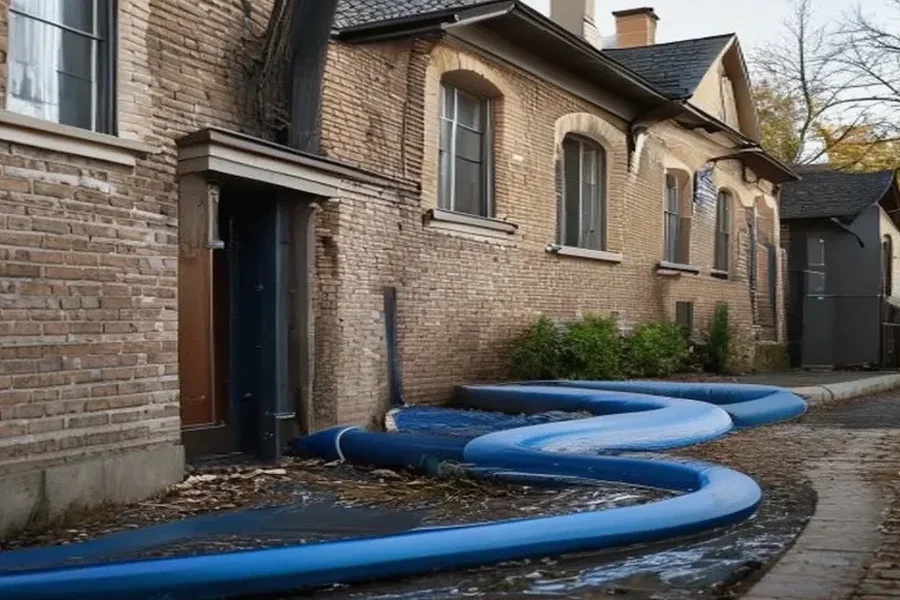
Camera diagnostic scope
Full lateral or building-stack scope. Locates condition, depth, surface impact. $250, credited toward repair.
Indy Drain Pros — Licensed in Indiana · Bonded & Insured · Satisfaction Guaranteed · (317) 608-3777 Need more context on this neighborhood? See our full Downtown service area for the full coverage map.
Downtown Indianapolis sewer line repair runs three distinct profiles. Lockerbie Square, Old Northside, Holy Rosary, and Chatham Arch hold homes whose laterals run 1850s-1900s clay tile and cast iron, often 8-12 feet deep, beneath protected historic-district streetscape; Mile Square residential towers and mixed-use buildings depend on building-lateral runs that exit to the public main under sidewalk or alley; and Fountain Square, Mass Ave, and Cole Noble conversions sit on hybrid plumbing where the original cast iron building stack meets modern PVC tenant runs. Camera scope first, historic-district coordination handled, Citizens Energy Group permits pulled, traffic control planned for street-cut work. Start at our service catalog or browse our downtown service area. Flat-rate Main Sewer Line Repair Downtown Indianapolis across the metro, 24/7 dispatch.
Lockerbie, Old Northside, Holy Rosary, Chatham Arch historic-district laterals. The 1850s-1900s residential blocks in the downtown historic districts hold some of the oldest residential laterals in Marion County — vitrified clay tile sections installed when the city first built out public sewer, often with cast iron transitions at the building tap. Many of these laterals are 130-170 years old and run 8-12 feet deep where modern subdivisions might be 4-6 feet. The failure modes are the same as elsewhere — joint root intrusion, gradual offset, segment cracking — but the repair calculus is different because the surface above the lateral is often protected historic streetscape, brick sidewalks, or original landscaping that can't be replicated quickly. CIPP cured-in-place lining is almost always the right call: it seals all joints in one installation, requires only two small access pits inside the property line, and avoids the historic-district approval, permit, and restoration timeline that traditional excavation would trigger. We coordinate the access path with the homeowner and the relevant historic-district commission before quoting.
Mile Square high-rise building laterals. The residential towers and mixed-use buildings across the Mile Square — Conrad, Cosmopolitan, AXIS, 360 Market Square, the Maxwell, Penn, and the older mid-rises along Meridian and Pennsylvania — depend on building laterals that exit the foundation, run under sidewalk or alley, and tie into the public main. Building-lateral work is commercial in scope: camera scope of the full stack-to-main path runs first, property-management coordination is standard, and street-cut permits with traffic control apply if any portion of the run requires access outside the building footprint. Several Mile Square property managers hold standing accounts with us for routine maintenance camera scopes and emergency dispatch. Pricing is line-item rather than per-foot at the commercial tier.
Fountain Square, Mass Ave, Cole Noble conversion buildings. The conversion stock — industrial buildings, warehouses, churches, and schools reworked into condos and lofts over the last 25 years — sits in a middle category. Modern PVC tenant plumbing was installed during conversion, but the original cast iron building lateral from the pre-conversion era typically remains in service. Camera scope reveals whether the failure point sits in the original cast iron run or in the modern PVC tenant tap. CIPP lining of the original cast iron stack is the typical fix when the host pipe still provides shape; pipe bursting is reserved for end-stage collapse cases.
Citizens Energy Group, traffic control, and street-cut permits. Marion County sewer authority work goes through Citizens Energy Group. Downtown street-cut permits add traffic-control planning, public-notice requirements, and restoration specifications that don't apply elsewhere in the metro. Trenchless methods avoid the entire street-cut permit category in most cases — CIPP and pipe bursting access pits stay on private property. When street-cut work is unavoidable, we plan traffic control and restoration upfront so the quote reflects the full project cost.
Full lateral or building-stack scope. Locates condition, depth, surface impact. $250, credited toward repair.
The standard downtown method. Avoids street-cut permits and historic restoration. $85-$220/ft.
Single failed section on private property. Excavate, replace, restore. $1,500-$4,500 with historic-district restoration.
Trenchless full replacement for collapsed laterals or end-stage Orangeburg in older infill. $70-$180/ft.
Mile Square tower and conversion building work. Line-item commercial pricing. Property-management coordination.
Add or upgrade exterior cleanout. Often paired with repair. $450-$1,400 with historic coordination.
Downtown pricing carries a premium on traditional excavation due to street-cut permits, traffic control, and historic district restoration. CIPP and pipe bursting avoid these surcharges by keeping work inside the property line.
Full scope. Credited toward repair.
Includes historic-district restoration where applicable.
Standard downtown method. No street-cut permits.
Trenchless replacement when CIPP not viable.
Traffic control and street-cut permit included.
Commercial. Property-management contracts available.
Permit fees and historic-district restoration itemized separately. Standing property-management accounts get scheduled-rotation pricing.
130-170 year clay tile. Cabling delivers short relief; CIPP is the long-term fix with historic-district sign-off.
Building-lateral indicator. Property-management coordination. Stack-to-main scope first.
Pre-purchase scope is critical given lateral age. Camera reveals condition before contract.
Hybrid PVC-plus-cast iron failure indicator. Scope identifies which side the failure sits on.
Same flat-rate everywhere — crews staged across the metro. Each area page covers the local pricing detail + access notes.
Historic-district CIPP specialty + Mile Square building-lateral commercial + conversion hybrid work. Citizens Energy Group permits, street-cut planning, traffic control all handled.
Call (317) 608-3777Residential repair pricing follows the metro standard — spot excavation $1,500-$4,500, CIPP $85-$220 per foot, pipe bursting $70-$180 per foot, traditional dig-and-replace $100-$300 per foot. Downtown carries premium pricing on traditional excavation due to street-cut permits, traffic control, and historic district restoration. Building-lateral commercial work is quoted line-item.
Downtown laterals run under sidewalks, paved alleys, street curbs, and inside protected historic-district zones where traditional excavation requires street-cut permits, traffic control, restoration, and historic-district approval. CIPP requires only two small access pits inside private property. The cost difference favors CIPP heavily once permits, traffic, and restoration are factored in.
Yes — building-lateral work for residential and mixed-use towers is coordinated through property management. Camera scope of the full stack-to-main path runs first; CIPP or spot repair follows based on the actual condition. Several Mile Square managers hold standing accounts with us for routine maintenance and emergency dispatch.
Yes. Lockerbie Square, Old Northside, Chatham Arch, and Holy Rosary all require historic-district review for visible exterior work and surface restoration. Trenchless methods minimize visible impact; when traditional excavation is required, we coordinate access points, trench routing, and restoration approach with the homeowner and the district before any work begins.
Average dispatch to downtown is 20-35 minutes — our fastest overall zone. Same-day scope for emergency sewer backups; emergency permits typically resolve within 1 business day for active failures.
Conversions are hybrid — modern PVC tenant plumbing meeting an original cast iron building lateral that's typically 80-130 years old. Camera scope identifies which side the failure sits on. The original building lateral usually gets CIPP lining; tenant-side issues get spot repair.
Yes — any street-cut requires traffic-control planning, public-notice timing, and restoration to municipal specification. We coordinate with the city upfront. CIPP and pipe bursting avoid street-cut category entirely in most cases by keeping access pits on private property.
CIPP liner work carries a manufacturer-backed warranty up to 50 years; pipe bursting and traditional replacement carry 25-year material and 10-year workmanship warranty. Spot excavation carries 5-year workmanship warranty. Building-lateral commercial work warranty is negotiated per contract.
Sewer line repair specialists — CIPP, pipe bursting, spot excavation, building-lateral commercial. Citizens Energy Group permits. Street-cut and traffic-control planning when required.