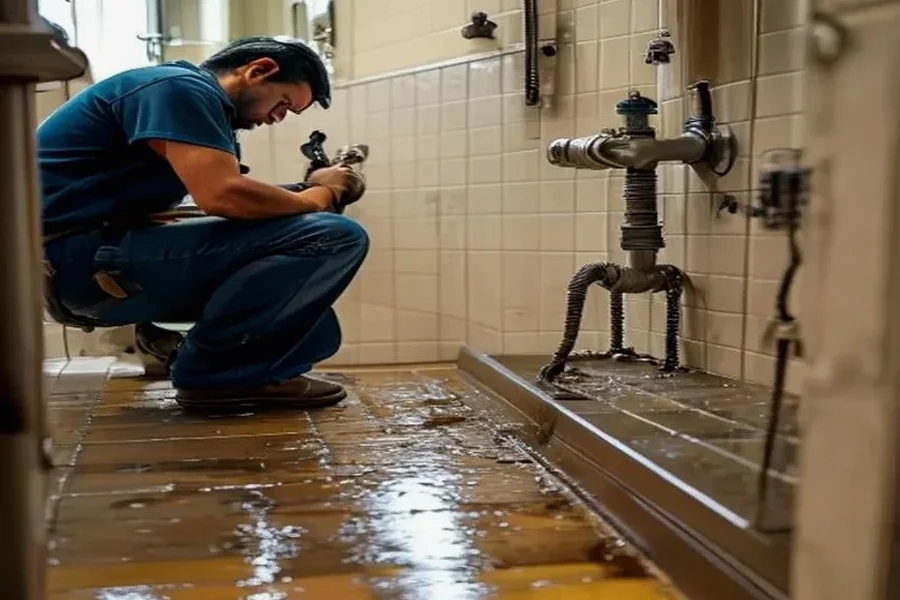
A closet auger is the first tool for any toilet clog. It's a rigid-shaft cable with a rubber sleeve designed to feed through the porcelain bowl trap without scratching the surface. It reaches roughly 3 feet into the drain — far enough to break up or retrieve the vast majority of toilet blockages. A closet auger is specifically engineered for toilet geometry and will not work correctly in a tub or shower drain.
For tub, shower, and sink drains, a hand snake or drum auger is the correct tool. The drum auger carries more cable — 25 to 50 feet — and enough torque to clear blockages in the branch line well past the fixture trap. When the blockage is calcium scale rather than organic material, a hydro jetter is the only tool that actually removes the buildup rather than just punching a hole through it.
When a toilet clog signals a main line problem
An isolated toilet clog — one fixture slow, everything else normal — is almost always a problem confined to that fixture's branch or the S-curve inside the bowl. But when you flush the toilet and hear gurgling from the floor drain, or when the tub backs up at the same time the toilet is slow, that's air being displaced through the shared drain system. That symptom points to a blockage in the main line or the soil stack, not an isolated fixture clog. In older Indianapolis homes with cast iron soil stacks, this pattern is common in late winter when mineral scale has narrowed the stack all season. A camera scope confirms which section is affected before any cabling begins.
Additional warning signs of a deeper blockage: multiple slow fixtures at once, sewage smell from the floor drain when running any water, or water backing up into the tub when the toilet flushes. Any of these means the problem is downstream of the fixture traps — in the shared ABS branch line, the vent stack, or the main.