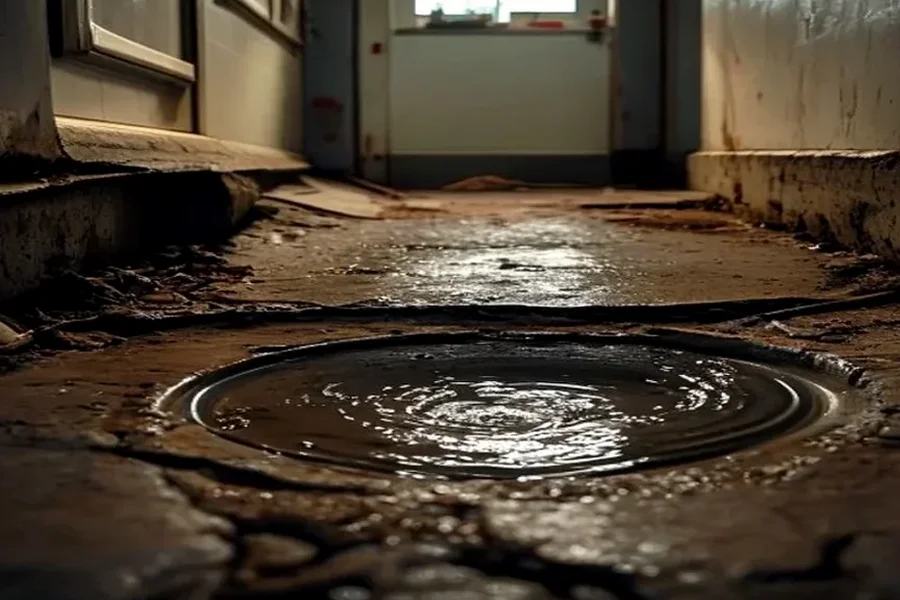
A complete sewer backup with sewage on the basement floor is one of the worst things that can happen to a house. The cleanup is expensive ($1,500-$5,000+ for professional sanitization), the damage to flooring and stored items is often unrecoverable, and the disruption to daily life lasts days.
The good news: it never happens without warning. Sewer lines telegraph problems for weeks or months before they fully fail. Here are the five signs we see — almost universally — preceding sewer backups in Indianapolis homes.
Signs Sewer Line Backup Indianapolis: Sign #1: Slow draining everywhere (not just one fixture)
The first reliable signal is that drains across the whole house slow down together. Not one fixture — multiple. Kitchen sink takes longer. Bathroom sink takes longer. Tub drains more slowly. The reason is that they all eventually empty into the same main sewer line, and that line is starting to restrict.
One slow drain = branch line issue (DIY-solvable). Multiple slow drains = main line issue. Sewer line cleaning service at this stage costs $300-$550 and prevents the eventual backup.
Sign #2: Gurgling toilets when other fixtures drain
The next signal is air movement through partially blocked lines. You flush the toilet and water gurgles in the bathtub. Or you run the washing machine and bubbles come up the basement floor drain. Or the toilet bubbles when the tub drains.
What's happening: water displaces air in the partially-blocked main line, and the air has to escape somewhere. It pushes back up through the lowest-resistance fixture.
Sign #3: Sewer smell in the yard or basement
Once the line is significantly restricted, sewage starts sitting in the pipe rather than flowing freely. Sitting sewage produces gas — hydrogen sulfide, methane. The gas escapes through any available path: a soggy patch above the lateral, a yard cleanout cap that's slightly loose, a basement floor drain whose P-trap has dried out.
If you suddenly notice a sewage smell that wasn't there before — particularly in the basement, or in the yard near where the sewer lateral runs out to the street — that's a strong signal the line is significantly compromised.
Sign #4: Soggy patches or extra-green grass over the lateral
This one takes longer to develop and is easier to miss. When a sewer lateral starts leaking — through cracked clay tile, separated joints, or root damage — wastewater leaks into the surrounding soil. Result: soggy ground that's wet even in dry weather, OR a strip of grass that's noticeably greener than the rest of the lawn.
If you can identify where your lateral runs (typically a straight line from your house to the street main, often 4-6 feet deep), look for these patterns. They indicate active leakage that will eventually progress to backup.
Sign #5: Water at the basement floor drain
This is the last warning before a full backup. Water — not necessarily sewage yet — starts appearing at the basement floor drain. It's often dismissed as "the floor drain backed up during a rainstorm" or "the sump pump must have triggered." But unless your home has confirmed CSO (combined sewer overflow) backup history, water at the basement floor drain is your sewer telling you it's done warning you.
At this point: stop running water immediately. Move valuables off the basement floor. Call (317) 608-3777. Same-day emergency dispatch.
The timeline (typical, not universal)
- Months 1-3 before backup: Slow drains across the house (sign 1). Often dismissed.
- Weeks 4-8 before backup: Gurgling and air sounds appear (sign 2).
- Weeks 2-4 before backup: Sewer smell intermittent (sign 3).
- Last 1-2 weeks: Visual evidence on lawn or basement (signs 4, 5).
- Backup event: Full sewer overflow.
This timeline isn't guaranteed — root-driven backups can compress to weeks rather than months, particularly in Indianapolis homes with mature trees and clay tile laterals. But the order of signs is consistent.
What to do at each stage
- Stage 1 (slow drains): Schedule sewer line cleaning. $300-$550. Most issues clear at this stage.
- Stage 2 (gurgling): Add camera scope to find the cause. $200-$350.
- Stage 3 (smell): If camera reveals root intrusion or pipe damage, decide on annual treatment vs trenchless lining.
- Stage 4 (lawn evidence): Trenchless pipe lining or excavation repair, depending on damage extent.
- Stage 5 (water at floor drain): Emergency call. Stop running water. Move valuables.
Indianapolis-specific risk factors
Homes most likely to develop sewer backups in Indianapolis share these characteristics:
- Built before 1980 (clay tile sewer laterals)
- Mature trees on the property or adjacent (root pressure)
- Located in Irvington, Crown Hill, Garfield Park, Meridian-Kessler, Fountain Square, or similar older neighborhoods
- No record of sewer cleaning in the past 24+ months
- Combined sewer system (most of Indianapolis core)
If 3+ of these apply to your home, consider a preventive camera scope and sewer line cleaning before any signs appear. Cheaper than backup cleanup, by an order of magnitude.
For related reading: Why Tree Roots Get Into Indianapolis Sewer Lines and How Often to Clean Indianapolis Drains.